
Electronic Assembly Machinery | SMT & PCB Equipment
-
Anunciante
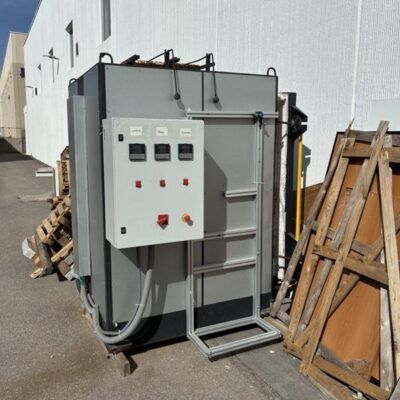
Industrial Electric Oven 50kW 380V for Sale | Heat Treatment Furnace 2016
UsedIndustrial electric oven, 50 kW, 75 A, 380 V, manufactured in 2016.
Robust steel construction with integrated control panel, electrical protections (IP65, differential 30 mA, magnetothermal 10 A) and 24 VDC control system. Fully functional, well‑maintained, and ideal for industrial heat treatment, drying, or preheating processes. Ready for transport.40.000,00 €50.000,00 €Industrial Electric Oven 50kW 380V for Sale | Heat Treatment Furnace 2016
40.000,00 €50.000,00 € -
Anunciante
ORION 3-Phase Voltage Stabiliser 120/150 KVA for Sale | Brand New, Ready to Ship
BRAND NEW
INPUT RANGE ±20/±15% OUTPUT ±1%
208/120V 60HZ
ORION 30-20/45-15
410X680X1200MM
IP21
200KG15.000,00 €30.000,00 €ORION 3-Phase Voltage Stabiliser 120/150 KVA for Sale | Brand New, Ready to Ship
15.000,00 €30.000,00 € -
Anunciante
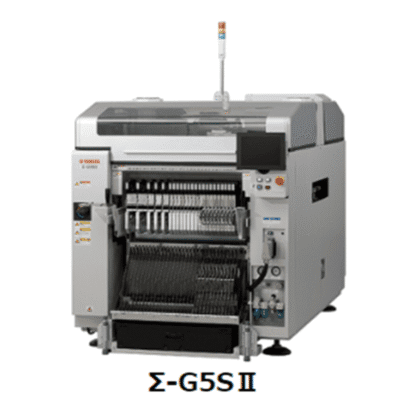
YAMAHA G5SII SMT Pick-and-Place Machine | High-Speed Precision Placement
Placement Speed: High-Speed Multi-Function Head ×2: 90,000 CPH (single-track/dual-track)
Placement Accuracy: High-Speed Multi-Function Head: 0201/03015: ±25μm, 0402: ±36μm, 0603: ±40μm
Flexible Multi-Function Head Accuracy: ±15μm
Supported Component Sizes: High-Speed Multi-Function Head: 0201 to L44×W44×H12.7mm; Flexible Multi-Function Head: 1005 to L72×W72×H25.4mm
Supported PCB Sizes: Single-track: L610×W510 mm to L50×W50 mm (optional: L1,200×W510 mm); Dual-track: L610×W250 mm to L50×W84 mm (dual feeder)
Number of Component Types: Up to 120 types (equivalent to 8 mm tape width)
Power Requirements: Three-phase AC200V ±10%, 50/60Hz
Air Supply Requirements: 0.45 to 0.69 MPa (4.6 to 7 kgf/cm²)
Machine Dimensions: L1,280 × W2,240 × H1,450 mm (excluding protrusions)
Weight: Approximately 1,800 kg
35.000,00 €50.000,00 €YAMAHA G5SII SMT Pick-and-Place Machine | High-Speed Precision Placement
35.000,00 €50.000,00 € -
Anunciante
YAMAHA iPulse 10 SMT Pick-and-Place Machine | High-Speed Precision Placement
Placement Speed: High-speed placement mode: approx. 10,000–20,000 CPH (depending on component type)
Placement Accuracy: ±50 μm (typical)
Component Sizes: 0201 to 50×50 mm
PCB Sizes: L50×W50 mm to L300×W250 mm
Component Types: 50–80 types (depending on feeder configuration)
Power Requirements: AC 200–240V, 50/60Hz
Air Supply: 0.45–0.69 MPa (4.5–7 kgf/cm²)
Machine Dimensions: L1,200 × W900 × H1,400 mm
Weight: approx. 1,200 kg
35.000,00 €50.000,00 €YAMAHA iPulse 10 SMT Pick-and-Place Machine | High-Speed Precision Placement
35.000,00 €50.000,00 € -
Anunciante
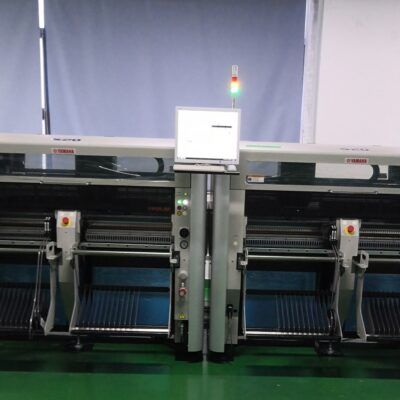
YAMAHA S20 SMT Pick-and-Place Machine | High-Speed, High-Precision PCB Placement | Components 0201-120×90mm
Placement Speed: Up to 45,000 CPH
Placement Accuracy: CHIP ±0.040 mm, IC ±0.025 mm
Component Size Range: 0201 – 120 × 90 mm (including BGA, CSP, connectors)
PCB Size:
Without buffers: 50×30 mm – 1,830×510 mm
With buffers: 50×30 mm – 540×510 mm
Board Thickness: 0.4 – 4.8 mm
Component Height: Up to 30 mm (pre-placed components up to 25 mm)
Feeder Capacity: Up to 180 feeders
Placement Angle: ±180°
Board Transfer Speed: Up to 900 mm/sec
Machine Dimensions: Approx. 1,750 × 1,770 × 1,420 mm
Machine Weight: Approx. 1,500 kg
-
Anunciante
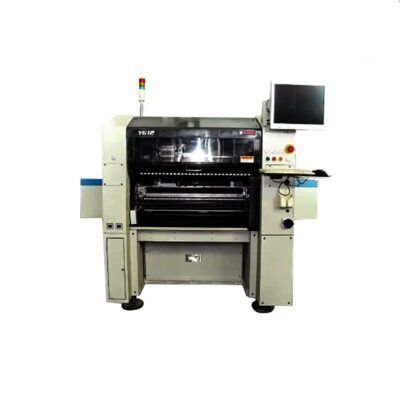
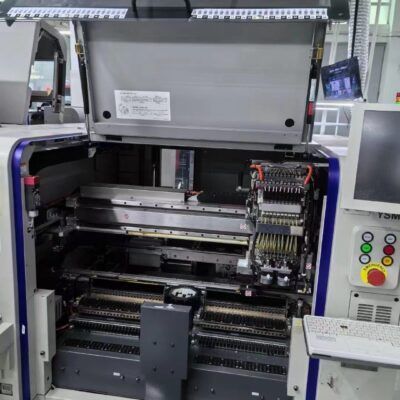
YAMAHA YG12 SMT PNP Machine Specs | High-Speed PCB Assembly
PCB Size:
Standard: 50 × 50 mm – 510 × 460 mm
Optional extension: up to 610 mm
Placement Speed: Up to 46,000 CPH (under optimal conditions)
Placement Accuracy: ±0.035 mm (±0.025 mm) Cpk ≥ 1.0 (3σ)
Component Size Range: 03015 (W) – 55 × 100 mm (L)
Feeder Capacity: Up to 96 × 8mm feeders, 15 tray feeders (with sATS 15)
Power Requirement: Three-phase AC 200/208/220/240/380/400/416 V ±10%, 50/60 Hz
Air Pressure Requirement: ≥0.45 MPa, clean and dry
Machine Dimensions: 1,254 mm (L) × 1,440 mm (W) × 1,445 mm (H)
Machine Weight: Approx. 1,270 kg
Component Types: Suitable for 0402 – 32 × 32 mm components
Key Features: Dual-beam design, flying vision system, high adaptability, FIFO dual-channel transfer, high-precision electric feeders, compatible with SM-series pneumatic feeders
-
Anunciante
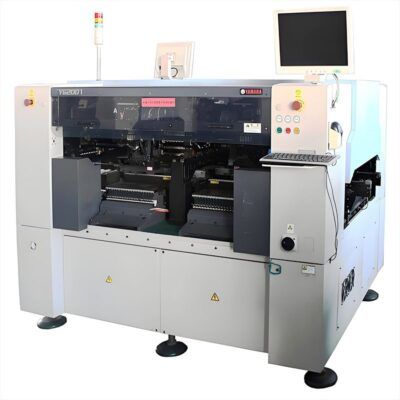
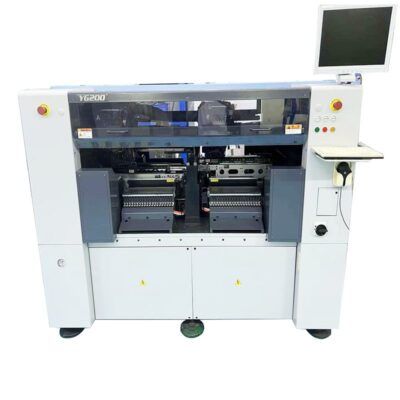
YAMAHA YG200L Pick and Place Machine | High-Speed Precision SMT Equipment
Equipped with advanced vision recognition and intelligent placement algorithms, the YG200L ensures high-speed production while maintaining excellent placement accuracy. Its flexible feeder configuration, robust mechanical design, and fast changeover capability make it ideal for high-volume and high-mix SMT production. Quanzhu Electronics Co., Ltd. supplies YAMAHA YG200L machines and original spare parts with fast delivery and professional support to optimize SMT production efficiency.

Explore electronic assembly machinery, SMT equipment and PCB production machines for professional electronics manufacturing. Makitor allows buyers to compare new and used equipment by production capacity, automation level, PCB dimensions, placement technology, configuration, condition and price.
Before choosing electronics manufacturing equipment, define the process you need to automate. A complete production line may include solder paste printing, component placement, reflow soldering, PCB handling, optical inspection and testing, while smaller workshops may only require individual or semi-automatic machines.
Electronic assembly machinery
Electronic assembly machinery includes equipment used to manufacture, assemble, solder, inspect and handle printed circuit boards and electronic components.
Depending on the production process, equipment may include:
Pick and place machines.
SMT production equipment.
Solder paste printers.
Reflow ovens.
PCB conveyors.
Automatic optical inspection systems.
PCB loaders and unloaders.
Soldering equipment.
Rework stations.
SMT equipment
Surface mount technology is widely used for assembling electronic components directly onto printed circuit boards.
An SMT production line can contain several interconnected machines.
Before purchasing SMT equipment, consider:
PCB dimensions.
Component sizes.
Required throughput.
Placement accuracy.
Number of product references.
Available factory space.
Required automation level.
SMT line equipment
A typical SMT line may combine several stages of production.
Depending on the application, these can include:
Solder paste printer.
PCB inspection.
Pick and place machine.
Reflow oven.
Conveyors.
AOI inspection.
Loading and unloading systems.
SMT line price
The price of an SMT line depends heavily on its capacity, speed, equipment configuration and level of automation.
A complete line may cost considerably more than individual machines because it can include several production stages and auxiliary systems.
When comparing prices, check what is actually included:
Feeders.
Conveyors.
Software.
PCB loaders.
AOI systems.
Installation accessories.
Spare parts.
Pick and place machines
A pick and place machine automatically collects components from feeders or trays and places them onto the PCB.
Important specifications include:
Placement speed.
Placement accuracy.
Number of heads.
Feeder capacity.
PCB dimensions.
Component range.
Vision system.
Control software.
Placement speed
Manufacturers may specify maximum placement rates under controlled test conditions.
Actual production output also depends on:
Component mix.
PCB complexity.
Feeder arrangement.
Machine travel distances.
Product changeovers.
Placement accuracy
Accuracy becomes especially important when working with small components, fine-pitch packages and densely populated boards.
When buying used equipment, inspect the condition and calibration of the machine’s cameras, axes and placement heads.
SMT feeders
Feeders supply electronic components to the placement machine.
When evaluating a used machine, verify:
Number of feeders included.
Feeder widths.
Mechanical condition.
Electronic compatibility.
Availability of additional feeders.
Vision systems
Modern placement machines commonly use cameras to recognise component position, orientation and dimensions.
Check:
Cameras.
Lighting.
Calibration.
Vision software.
Image quality.
Solder paste printers
Solder paste printers deposit solder paste onto defined areas of a PCB before components are placed.
Equipment may be:
Manual.
Semi-automatic.
Fully automatic.
Compare:
Maximum PCB size.
Printing accuracy.
Stencil dimensions.
Alignment system.
Printing pressure control.
Automation level.
Semi-automatic electronics assembly equipment
Semi-automatic equipment for electronics assembly can be suitable for prototypes, smaller production runs and businesses that do not require a fully automated SMT line.
Potential advantages include:
Lower initial investment.
Smaller footprint.
Flexible production.
Easier product changes.
The right solution depends on the required production volume and accuracy.
Reflow ovens
A reflow oven heats assembled PCBs according to a controlled temperature profile in order to form solder joints.
Compare:
Number of heating zones.
Cooling zones.
Conveyor width.
Conveyor speed.
Temperature control.
Electrical power requirements.
Reflow temperature profile
The thermal profile must be appropriate for the solder paste, components and PCB design used in production.
On used equipment, verify that each heating zone reaches and maintains the required temperature consistently.
PCB conveyors
PCB conveyors connect individual machines and transfer boards through the manufacturing line.
Important specifications include:
Adjustable width.
Length.
Transport speed.
Working height.
Board direction.
Machine communication compatibility.
PCB loaders and unloaders
Automatic loading and unloading equipment can improve production flow by handling PCB magazines at the start or end of a production line.
Check:
Magazine dimensions.
PCB sizes.
Cycle time.
Communication interfaces.
Working height.
AOI inspection equipment
Automatic optical inspection systems use cameras and software to inspect selected characteristics of assembled PCBs.
Depending on the machine and programming, they may detect:
Missing components.
Incorrect orientation.
Placement errors.
Some solder defects.
Other programmed deviations.
SPI systems
Solder paste inspection systems can inspect the paste deposition process before component placement.
This can help identify certain printing problems before boards continue through the line.
PCB assembly machine price
The price of a PCB assembly machine varies significantly depending on the technology involved.
Factors include:
Placement speed.
Accuracy.
Number of heads.
Feeder capacity.
PCB dimensions.
Automation.
Brand and model.
Year.
Condition.
Wave soldering machines
Wave soldering machines may be used for certain through-hole components and PCB assembly processes.
Compare:
Working width.
Preheating system.
Solder temperature control.
Conveyor speed.
Solder pot capacity.
Extraction requirements.
Selective soldering
Selective soldering machines apply solder to specific areas of a PCB according to the programmed manufacturing process.
Important factors include precision, programming capability, PCB dimensions and process control.
Electronics rework equipment
Rework equipment can be used for removing, replacing or repairing certain electronic components.
Compare:
Heating control.
Bottom preheater.
Vision system.
PCB support.
Nozzles.
Temperature programming.
BGA rework stations
BGA rework equipment is designed for specialised component removal and replacement operations.
Temperature control and component alignment are particularly important for these processes.
PCB manufacturing equipment
Electronic production can require different machinery depending on whether the business manufactures bare PCBs or assembles components onto existing boards.
Before buying, clearly determine whether equipment is required for:
PCB production.
Component assembly.
Soldering.
Inspection.
Testing.
Repair.
Equipment for prototype electronics production
Prototype production often prioritises flexibility rather than maximum speed.
Useful characteristics may include:
Easy programming.
Fast product changeovers.
Flexible feeders.
Wide PCB compatibility.
Low-volume production capability.
Equipment for volume production
Higher-volume factories usually place more emphasis on:
Throughput.
Automation.
Repeatability.
Production uptime.
Automatic handling.
Maintenance support.
PCB dimensions
Always confirm the minimum and maximum PCB dimensions supported by the equipment.
Other important specifications can include:
PCB thickness.
PCB weight.
Edge clearance.
Transport direction.
Industrial control software
Software is an important part of automated electronics machinery.
When buying used equipment, verify:
Installed software version.
Licences.
Backups.
Machine programs.
Compatibility with current systems.
Industrial computers
Some electronic production machines depend on a dedicated industrial PC.
On older equipment, computer hardware and operating system compatibility may become an important maintenance consideration.
PLC, servo motors and drives
Automated production equipment may use PLCs, servo motors and drive systems for machine control.
Check:
Machine alarms.
Servo drives.
Motors.
Sensors.
Communication systems.
Spare part availability.
Compressed air requirements
Some electronics production machinery requires compressed air.
Before installation, verify:
Required pressure.
Air consumption.
Air quality.
Connection size.
Electrical requirements
Before purchasing machinery from another country, confirm:
Voltage.
Frequency.
Single-phase or three-phase supply.
Installed power.
Connection requirements.
New electronic assembly machinery
New equipment has no previous wear on placement heads, motors, cameras, conveyors, sensors or electronic control systems.
Warranty availability depends on the manufacturer or seller.
Used electronic assembly machinery
Buying used electronics manufacturing equipment can reduce the initial investment required to create or expand a production line.
Technical inspection is especially important because the machine’s software and electronic controls may be as important as its mechanical condition.
What to inspect on used electronic equipment
Check:
Axes and guides.
Placement heads.
Servo motors.
Cameras.
Sensors.
Conveyors.
Software.
Industrial computer.
Control electronics.
Documentation.
Operating hours
Operating hours can provide useful information but should not be considered alone.
Maintenance history and the type of production performed can be equally important.
Maintenance history
When available, review records for:
Preventive maintenance.
Repairs.
Calibration.
Head servicing.
Software updates.
Component replacement.
Calibration
Some machines require periodic calibration to maintain placement accuracy and repeatability.
Verify whether the required tools, procedures and software remain available.
Machine testing
When possible, perform a functional test before buying.
Check:
Startup.
Axis movement.
Vision system.
PCB transport.
Feeders.
Sensors.
Machine alarms.
Temperature control where applicable.
Technical documentation
For complex electronics machinery, documentation can significantly affect future maintenance.
Useful documents include:
User manuals.
Service manuals.
Electrical diagrams.
Software backups.
Spare parts lists.
Calibration procedures.
Spare parts
Before purchasing older machinery, check the availability of critical parts such as:
Servo motors.
Drives.
Cameras.
Sensors.
Electronic boards.
Feeders.
Industrial computers.
Electronic equipment obsolescence
Older industrial machines may rely on electronic components or software that are no longer manufactured or officially supported.
Always investigate spare parts and technical support before purchasing older equipment.
Electronic assembly machinery prices
The price of electronic assembly machinery depends on factors such as:
Machine type.
Production speed.
Accuracy.
Automation level.
PCB capacity.
Manufacturer.
Model.
Year.
Condition.
Included accessories.
Total cost of an electronics production line
In addition to purchase price, consider:
Transport.
Installation.
Commissioning.
Feeders.
Software.
Compressed air.
Extraction systems.
Maintenance.
How to choose electronic assembly equipment
Before purchasing, define:
Production process.
PCB dimensions.
Component types.
Required throughput.
Required accuracy.
Automation level.
Available space.
Budget.
Buy electronic assembly machinery on Makitor
On Makitor you can compare new and used electronic assembly machinery, SMT equipment and PCB production machines using the technical information available in each listing.
Compare production technology, capacity, speed, automation, condition, location and price before selecting equipment.
Frequently asked questions
What machinery is used for PCB assembly?
Depending on the process, equipment may include solder paste printers, pick and place machines, reflow ovens, conveyors and inspection systems.
What is an SMT line?
An SMT line is a combination of machines used to assemble surface-mounted electronic components onto printed circuit boards.
What should I inspect on used electronics machinery?
Inspect the mechanical systems, placement heads, cameras, sensors, motors, electronics, software, documentation and spare part availability.
What determines PCB assembly machine price?
Price depends mainly on machine type, placement speed, accuracy, feeder capacity, automation, age, condition and included equipment.
Is semi-automatic equipment suitable for small production?
It can be suitable for prototypes and lower production volumes when full automation is not required.