Explore lathes and milling machines for sale for metalworking workshops, maintenance departments, engineering companies and industrial production. Makitor allows buyers to compare new and used machines by working capacity, spindle power, dimensions, control system, equipment, condition and price.
Lathes and milling machines perform different machining operations. A lathe primarily rotates the workpiece while a cutting tool removes material, whereas a milling machine normally uses a rotating cutting tool to machine a fixed or moving workpiece.
Lathes and milling machines
Lathes and milling machines are among the most common machine tools used for machining metal components.
Depending on the application, this category can include:
Conventional metal lathes.
Industrial lathes.
CNC lathes.
Bench lathes.
Conventional milling machines.
Universal milling machines.
Turret milling machines.
CNC milling machines.
Combined lathe and milling machines.
Milling machines for sale
When looking for a milling machine for sale, compare the machine according to the size and type of components that will actually be machined.
Important specifications include:
X-axis travel.
Y-axis travel.
Z-axis travel.
Table dimensions.
Maximum table load.
Spindle power.
Spindle speed range.
Tool holder.
Machine weight.
Industrial milling machines
An industrial milling machine is generally designed for professional workshop or production use.
Compared with lighter machines, industrial models may provide greater:
Rigidity.
Motor power.
Working capacity.
Table size.
Machine mass.
Production capability.
Conventional milling machines
Conventional milling machines allow the operator to control the machining process manually or through mechanical feed systems.
They can be useful for:
Maintenance.
Repair work.
Prototypes.
Tool making.
Small production runs.
Training environments.
Universal milling machines
Universal milling machines provide flexible machining capability and may include swivelling tables, horizontal or vertical configurations and different feed systems depending on the model.
Before buying, check:
Table movements.
Spindle configuration.
Feed ranges.
Available tooling.
Machine rigidity.
Vertical milling machines
Vertical milling machines use a vertically arranged spindle and are commonly used for face milling, drilling, slotting and other machining operations.
Compare the available spindle-to-table distance and axis travel with the workpieces you intend to machine.
Horizontal milling machines
Horizontal machines use a horizontally oriented spindle and can be useful for particular milling operations depending on the tooling and workpiece geometry.
Turret milling machines
Turret-style milling machines are common in workshops requiring a flexible manual machine for different machining operations.
Important points include:
Table dimensions.
Axis travel.
Quill travel.
Spindle speeds.
Head adjustment.
Feed systems.
240V milling machines
A 240V milling machine may be useful where a three-phase industrial supply is not available.
Before buying, always verify the exact voltage, frequency, phase configuration and electrical power requirements stated for the machine.
CNC milling machines
CNC milling machines use a programmable control system to automate axis movements and machining operations.
When comparing CNC machines, consider:
Number of controlled axes.
Axis travels.
Spindle speed.
Spindle power.
Tool holder.
Tool changer.
CNC control.
Positioning accuracy.
Metal lathes
A metal lathe rotates a workpiece while cutting tools remove material.
Typical operations include:
Turning.
Facing.
Boring.
Thread cutting.
Drilling.
Parting.
Industrial lathes
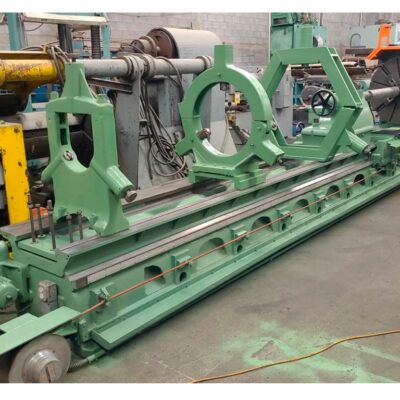
An industrial lathe can be designed for continuous professional machining and larger workpieces.
Important specifications include:
Distance between centres.
Swing over bed.
Swing over carriage.
Spindle bore.
Spindle speed range.
Motor power.
Machine weight.
Distance between centres
Distance between centres determines the approximate maximum length of workpiece that can be supported between the headstock and tailstock.
Always allow for tooling and actual machining requirements when selecting machine size.
Swing over bed
Swing over bed indicates the maximum theoretical diameter that can rotate above the lathe bed.
The practical machining diameter may be lower depending on carriage geometry and tooling.
Spindle bore
Spindle bore is particularly important when machining bars or long components through the headstock.
A larger bore can increase the range of components that can be processed.
Spindle speed
The suitable spindle speed depends on:
Workpiece diameter.
Material.
Tool type.
Machining operation.
Required surface finish.
Conventional metal lathes
Conventional lathes remain widely used for flexible machining, maintenance and individual components.
Before buying a used machine, inspect:
Bedways.
Headstock.
Spindle bearings.
Gearbox.
Leadscrew.
Cross-slide.
Tailstock.
Bench metal lathes
Smaller bench lathes can be suitable for workshops machining relatively compact components.
Compare:
Maximum turning diameter.
Distance between centres.
Spindle bore.
Motor power.
Machine rigidity.
CNC lathes
CNC lathes automate tool and axis movements using programmed machining cycles.
Important specifications include:
Maximum turning diameter.
Maximum turning length.
Spindle power.
Spindle bore.
Chuck diameter.
Turret capacity.
Number of axes.
Control system.
Rotary lathe machines
Lathe machining is based on the rotation of the workpiece. Different machine configurations are available depending on component dimensions, required accuracy and production volume.
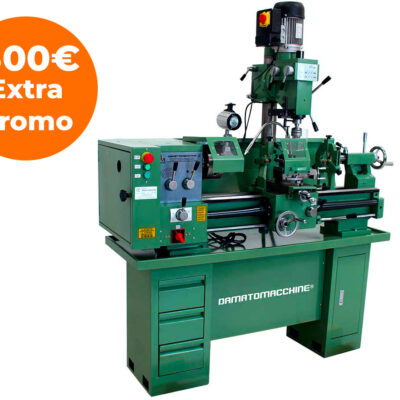
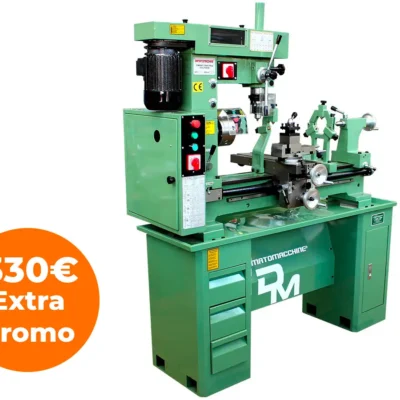
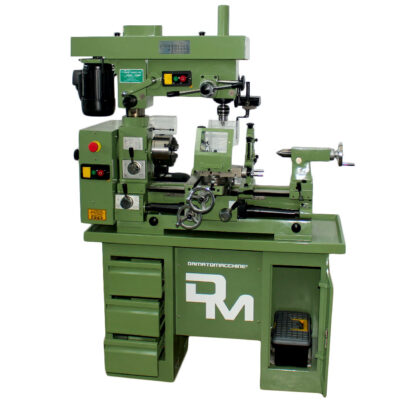
Combined lathe and milling machine
A lathe milling machine or combined lathe-mill can provide turning, milling and drilling capability in a single compact machine.
These machines can be useful for:
Small workshops.
Maintenance departments.
Prototype work.
Training.
Limited floor space.
Lathe-mill combination machines
Before selecting a combination machine, verify the individual capacity of each function.
Compare:
Turning diameter.
Distance between centres.
Milling travel.
Milling spindle speed.
Lathe spindle speed.
Motor power.
Table size.
Machine rigidity
Rigidity affects vibration, cutting stability and potential machining accuracy.
Heavier machines may provide greater structural stability but also require suitable floors, transportation and handling equipment.
Machine tool spindle
The spindle is a critical component on both lathes and milling machines.
On used machinery, inspect for:
Noise.
Vibration.
Play.
Excessive temperature.
Tool or chuck mounting condition.
Guideways
Machine guideways control axis movement and strongly influence geometry and accuracy.
Check used machines for:
Visible wear.
Scoring.
Uneven movement.
Excessive backlash.
Lubrication problems.
Leadscrews and ball screws
Manual machines may use conventional leadscrews, while CNC machines often use ball screws or other precision drive systems.
Excessive backlash can affect positioning accuracy.
Tooling systems
Tooling supplied with a machine can significantly affect the real value of the purchase.
Useful accessories may include:
Lathe chucks.
Tool posts.
Collets.
Milling vises.
Tool holders.
Drill chucks.
Cutting tools.
Lathe chuck
Inspect the chuck for wear and proper gripping.
Check jaw condition and verify that it is suitable for the intended work.
Milling machine vise
A suitable machine vise helps secure workpieces during milling operations.
Inspect its screw, jaws, base and clamping condition.
Coolant system
Many metal cutting machines use coolant to control temperature, assist chip removal and improve certain machining processes.
Inspect:
Coolant tank.
Pump.
Hoses.
Filters.
Leaks.
Digital readout
Conventional machines may be equipped with a digital readout to display axis position.
Check that scales and display operate correctly on used machinery.
Electrical supply
Before purchasing any lathe or milling machine, verify:
Voltage.
Frequency.
Single-phase or three-phase supply.
Installed power.
Required protection.
New lathes and milling machines
New machinery has no previous mechanical wear and may provide current controls, tooling systems and manufacturer support.
Warranty conditions depend on the manufacturer or seller.
Used lathes and milling machines
Buying used lathes and milling machines can reduce initial investment and provide access to larger industrial equipment.
Technical condition should be assessed carefully before purchase.
What to inspect on a used lathe
Check:
Bedways.
Spindle.
Bearings.
Gearbox.
Leadscrew.
Cross-slide.
Tailstock.
Electrical system.
What to inspect on a used milling machine
Check:
Spindle.
Axis guideways.
Backlash.
Table condition.
Feeds.
Gearbox or belts.
Digital readout.
Electrical controls.
Machine test
Whenever possible, run the machine before purchase.
Verify:
Spindle operation.
All spindle speeds.
Axis movement.
Feeds.
Gear changes.
Coolant system.
Emergency stop.
Machine accuracy
If dimensional precision is critical, the machine should be evaluated under appropriate test conditions.
Older machines can develop wear in guideways, screws, bearings and spindle assemblies that affects machining accuracy.
Maintenance history
Where available, review information relating to:
Lubrication.
Spindle repairs.
Bearing replacement.
Gearbox repairs.
CNC control repairs.
Electrical maintenance.
Spare parts
Before purchasing an older model, check the availability of critical components such as:
Spindle bearings.
Belts.
Gears.
Motors.
Electrical components.
CNC drives.
Sensors.
Lathe and milling machine prices
The price of a lathe or milling machine depends on factors including:
Machine size.
Working capacity.
Motor power.
Manual or CNC control.
Manufacturer.
Model.
Age.
Included tooling.
Condition.
How to choose a lathe or milling machine
Before buying, define:
Workpiece material.
Maximum dimensions.
Required machining operations.
Required accuracy.
Production quantity.
Manual or CNC operation.
Available workshop space.
Electrical supply.
Budget.
Buy lathes and milling machines on Makitor
On Makitor you can compare new and used lathes and milling machines for sale using the technical information available in each listing.
Compare working capacity, spindle power, dimensions, control system, equipment, condition, location and price before selecting a machine.
View lathes and milling machines →
You can also browse the main metalworking machinery category:
View metalworking machinery →
Frequently asked questions
What is the difference between a lathe and a milling machine?
A lathe normally rotates the workpiece, while a milling machine normally rotates the cutting tool.
What should I check when buying a used milling machine?
Inspect spindle condition, guideways, backlash, table, feed systems, electrical equipment and general machine geometry.
What should I check on a used lathe?
Inspect the bed, spindle, bearings, gearbox, leadscrew, carriage, tailstock and electrical system.
Can I buy a combined lathe and milling machine?
Yes. Combination machines provide several machining functions in one unit and can be useful where workshop space is limited.
What affects milling machine price?
Capacity, axis travel, spindle power, control system, manufacturer, equipment, age and condition are major factors.