

Complete Guide
What they are, what they’re for, integrated functions (table saw, planer, thicknesser, router…), pros & cons, maintenance, and how to choose the best combo for your shop.
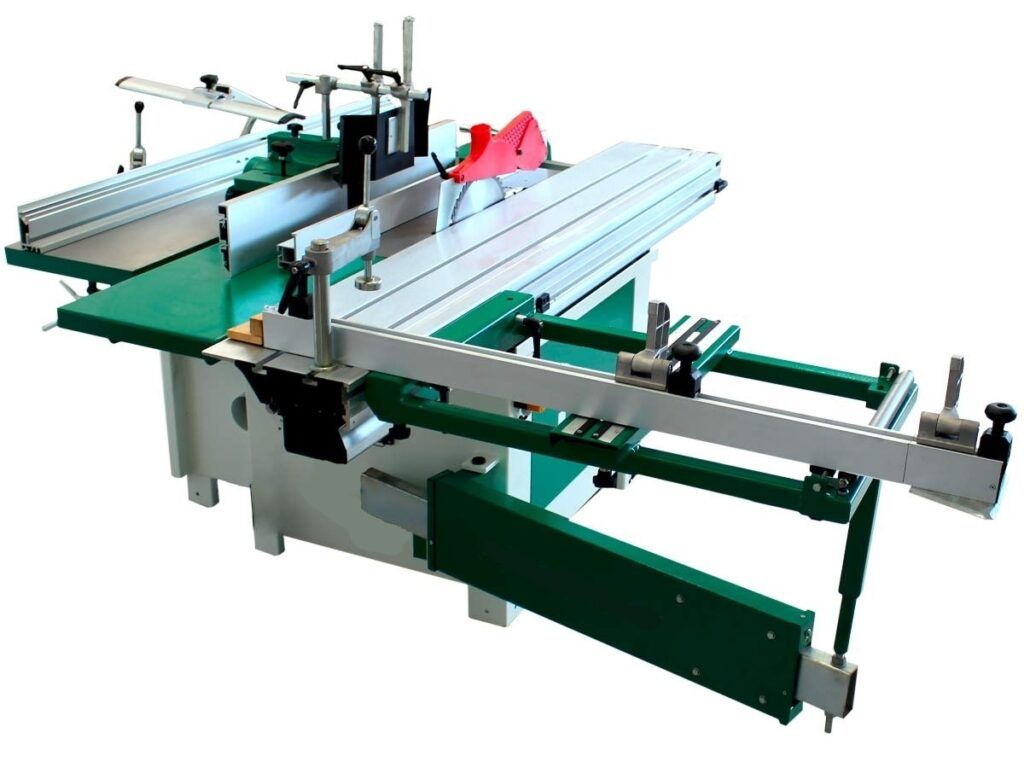
What is a multi-function woodworking combination machine?
A versatile, compact tool that integrates several woodworking operations in one unit: table saw, jointer/planer, thicknesser, router/shaper and, on some models, slot mortiser or sliding table. Built for carpenters, cabinetmakers and DIYers seeking space savings and productivity without losing accuracy.
Key features
- Compact footprint: ideal for small shops or limited spaces.
- Multiple integrated functions: sawing, jointing, thicknessing, routing, and more.
- Fast changeovers: guided steps and repeatable stops.
- High precision: ground tables, parallel fences and graduated angles.
- Dust extraction ready: standard ports for central vacuum.
- Power options: 230V single-phase or 400V three-phase for intensive use.
Advantages & disadvantages
Pros
- Space saving: several machines in one.
- Efficiency: fewer setup times and tool changes.
- Lower total cost: one investment for many processes.
- Versatility: furniture, trim, repairs and structural parts.
Potential cons
- Sequential use of functions (not simultaneous).
- Needs fine adjustments to keep accuracy between operations.
- Workpiece size limited by table and fence travel.
Common uses
- Building and fitting furniture (faces, countertops, doors).
- Creating decorative parts and moldings.
- Repairs and fine adjustments on site or in shop.
- Producing structural elements in solid wood or panels.
Quick comparison: what to check before buying
| Criterion | Small shop / hobby | Heavy professional |
|---|---|---|
| Motor power | 1.5–2.2 kW (230V) | 3–5.5 kW (400V 3-phase) |
| Jointing width | 200–260 mm | 300–410 mm |
| Thickness height | 160–200 mm | 220–260 mm |
| Saw Ø / cut height | 250–315 mm / 75 mm | 315–350 mm / 100 mm |
| Sliding table | Basic, short travel | Long carriage with telescopic stop |
| Dust extraction | 1 × 100 mm | 2–3 ports 100/120 mm |
Maintenance & safety
For performance and durability, follow preventive maintenance:
- Clean tables, fences and guards after each session.
- Sharpen or replace knives and blades by hours of use.
- Check belts, bearings and electrical connections.
- Use PPE (glasses, hearing protection, push sticks).
- Ensure level installation and proper dust collection.
How to choose your combination machine
- Work type: hobby, semi-pro, or production.
- Workpiece size: required jointing width and thickness height.
- Power: 230V single-phase or 400V three-phase.
- Sliding carriage: essential for square/panel cutting.
- Accessories: precise rip fence, angle stops, extension tables.
- Service & spares: local availability.
Discover multi-function combination machines at Makitor
Explore our selection and take your projects to the next level with efficient, safe, high-quality tools.
View combination machines List your machine for free WhatsApp advice
FAQ
Can a combo replace standalone machines?
For most shops, yes—precision with space savings. In heavy production, some specialized tasks may still need dedicated machines.
What’s the minimum power?
For hobby/light furniture, 1.5–2.2 kW at 230V works well. For heavy thicknessing, hardwoods or intensive use, 3–5.5 kW at 400V is ideal.
How many functions are recommended?
Five is the standard (saw, jointer, thicknesser, router/shaper, sliding table). Add mortiser/extra tables if you do complex joinery.
What maintenance is critical?
Keep knives and blades sharp, align fences/tables, check belts, and ensure proper dust extraction.